
Top 7 Best Portable Ultrasound Machines for MSK Imaging in 2026
Clinician-reviewed ranking of the 7 best handheld ultrasound machines for MSK imaging in 2026. Ranked on image quality, needle guidance, AI tools, regulatory clearance, and price. Covering physiotherapy, sports medicine, orthopedics, and injection guidance settings worldwide.
What Makes a Handheld Ultrasound Good for MSK?
Not all handheld ultrasounds are built for musculoskeletal work. MSK imaging demands high-frequency linear probes, exceptional near-field resolution, and precise needle visualization — requirements that general-purpose or cardiac-optimized devices often fall short on. Before ranking these devices, here are the criteria that actually matter in an MSK clinic setting.
How We Evaluated These Devices
Each device on this list was evaluated against five criteria relevant to MSK clinical practice, drawing on published peer-reviewed comparisons, manufacturer specifications, independent frame-rate and image quality testing, and verified regulatory documentation.
The five scoring dimensions are: Image Quality (near-field resolution and contrast for superficial MSK structures), MSK Specificity (probe frequency range, presets, and AI tools purpose-built for musculoskeletal imaging), Needle Guidance (dedicated needle visualization modes and real-world procedural performance), Ease of Use (app interface, preset workflow, and learning curve for clinical adoption), and Value (price relative to feature set, membership model, and total cost of ownership).
Devices ranked 6 and 7 carry editorial caveats due to limited independent peer-reviewed evidence. All regulatory claims were verified against publicly available FDA 510(k) databases and manufacturer documentation at time of publication. Pricing reflects USD list prices as of June 2026 and may vary by region or distributor.
At a Glance — Top 7 Compared
| # | Device | Best For | Probe / Freq | AI Tools | Connectivity | Price (USD) |
|---|---|---|---|---|---|---|
| 1 | Clarius L15 HD3 | Best MSK Overall | Linear, 5–15 MHz | FDA-cleared AI | Wireless | $3,595 + membership |
| 2 | GE Vscan Air CL | Best Dual-Probe | Linear + Phased, 1.6–12 MHz | Limited | Wireless | ~$5,499 |
| 3 | Butterfly iQ3 | Best Full Body | Universal chip, 1–12 MHz | Butterfly Garden AI | Wired | ~$2,999 incl. 1yr plan |
| 4 | Philips Lumify L12-4 | Best Hospital Workflow | Linear, 4–12 MHz | None | Wired | ~$4,500 |
| 5 | Mindray TE Air e5M | Best 2-in-1 Probe | Linear + Convex, 2–8 MHz | None | Wireless | ~$4,125 |
| 6 | Suresult L10H | Budget Option | Linear, 7.5–10 MHz | None | Wireless | ~$2,800 |
| 7 | TodoPocus L10H-Guide | Budget Needle Guidance | Linear, 7.5–10 MHz | None | Wireless | ~$2,500 |
The Top 7 in Detail
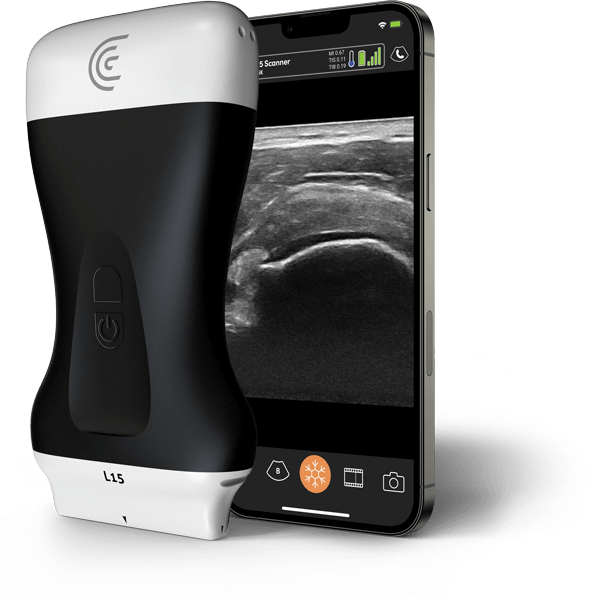
MSK imaging demands fast, reliable answers at the point of care. Tendons, ligaments, and nerves are shallow structures that require high-frequency linear imaging and precise needle visualization. The Clarius L15 HD3 is an AI-powered wireless POCUS scanner built to meet those demands. Its 5–15 MHz linear probe delivers HD imaging in the near field, with performance comparable to compact cart-based systems. Independent peer-reviewed studies support Clarius image quality for MSK structures including median nerve evaluation. What separates the L15 HD3 from every other handheld ultrasound system on this list is Clarius Intelligence, the AI platform powering its MSK-specific tools. T-Mode provides real-time anatomical labeling of shoulder and knee structures, reducing variability for less experienced sonographers. MSK AI automates tendon segmentation and thickness measurement for the Achilles, patellar, and plantar fascia tendons. It is the only handheld ultrasound system with FDA 510(k) clearance for these AI-guided MSK tools. For clinicians performing guided injections, AI-powered voice controls allow hands-free scanner adjustment mid-procedure, improving both workflow efficiency and procedural accuracy. Trusted with nearly 7 million scans globally, the Clarius L15 HD3 is cleared by the FDA, CE MDR certified, and licensed by Health Canada.
- Only FDA-cleared AI for MSK point-of-care ultrasound
- T-Mode and Clarius Classroom accelerate learning for less experienced sonographers
- AI voice controls keep hands free during guided injections
- HD imaging comparable to compact cart systems
- Cleared by FDA, CE MDR, and Health Canada
- Clarius Classroom supports ongoing clinical education
- Trusted with nearly 7 million scans globally
- Annual membership required after year one for full AI feature set
- 60-min battery life shorter than some competitors
- iOS and Android only — no Windows app
GE HealthCare is one of the most established names in diagnostic imaging, and the Vscan Air SL is their flagship handheld device. It earns its place at #2 on image quality and brand trust. The dual-probe design — a phased array on one end and a linear transducer on the other — gives MSK clinicians superficial imaging capability without carrying a second device. The linear side performs well for tendons, ligaments, and guided injections, and the device consistently scores highly for ease of use in clinical adoption studies. Where it falls behind the Clarius L15 HD3 is on MSK-specific tooling: there is no dedicated AI, no tendon auto-measurement, and no voice controls. At $5,499 it is also the most expensive device on this list. It is best suited to clinicians who also perform cardiac or abdominal imaging and want one wireless device covering multiple modalities — particularly in emergency medicine or internal medicine settings where MSK is one of several scan types needed daily.
- Dual-probe versatility for multi-specialty use
- Strong brand trust and hospital procurement track record
- Excellent image quality, consistently top-rated in peer comparisons
- MyRemoteShare for real-time scan sharing with colleagues
- No mandatory subscription for basic use
- Most expensive device on this list
- No MSK-specific AI tools or tendon measurement
- Only 50 min battery life
- Linear probe tops out at 12 MHz vs 15 MHz on the Clarius L15 HD3
Butterfly Network built the iQ3 around a single semiconductor chip that covers the full 1–12 MHz range, switching between MSK, abdominal, and cardiac presets without swapping probes. For clinicians who need a single device across multiple organ systems, this is a significant practical advantage. On the needle guidance front, the Butterfly iQ3 is genuinely competitive: Needle Viz visually highlights the needle in real time during in-plane procedures, and Biplane Imaging allows simultaneous short and long axis views — a feature that helps significantly during complex injection guidance. The MSK preset has been developed with a focus on contrast resolution to highlight crisp borders between structures, and it is well-regarded in the interventional POCUS community. The key limitation for MSK-only specialists is image quality in the near field: the universal chip tops out at 12 MHz versus 15 MHz on the Clarius L15 HD3, and the difference is clinically noticeable for very superficial structures such as digital tendons and small joints. The wired connection is also a practical friction point for injection procedures. Best positioned for mixed-practice clinicians or those early in their POCUS journey who need one device across multiple specialties.
- Single probe covers full body — no transducer swapping
- Needle Viz and Biplane imaging for complex injection guidance
- Butterfly Garden AI app marketplace for expanding functionality
- Strong onboarding and guided scanning for POCUS beginners
- Competitive price point with optional lifetime plan
- Wired connection limits freedom during procedures
- Near-field MSK resolution below dedicated high-frequency linear probes
- Generalist design not optimized specifically for MSK
- Tops out at 12 MHz vs 15 MHz on leading MSK-specific devices
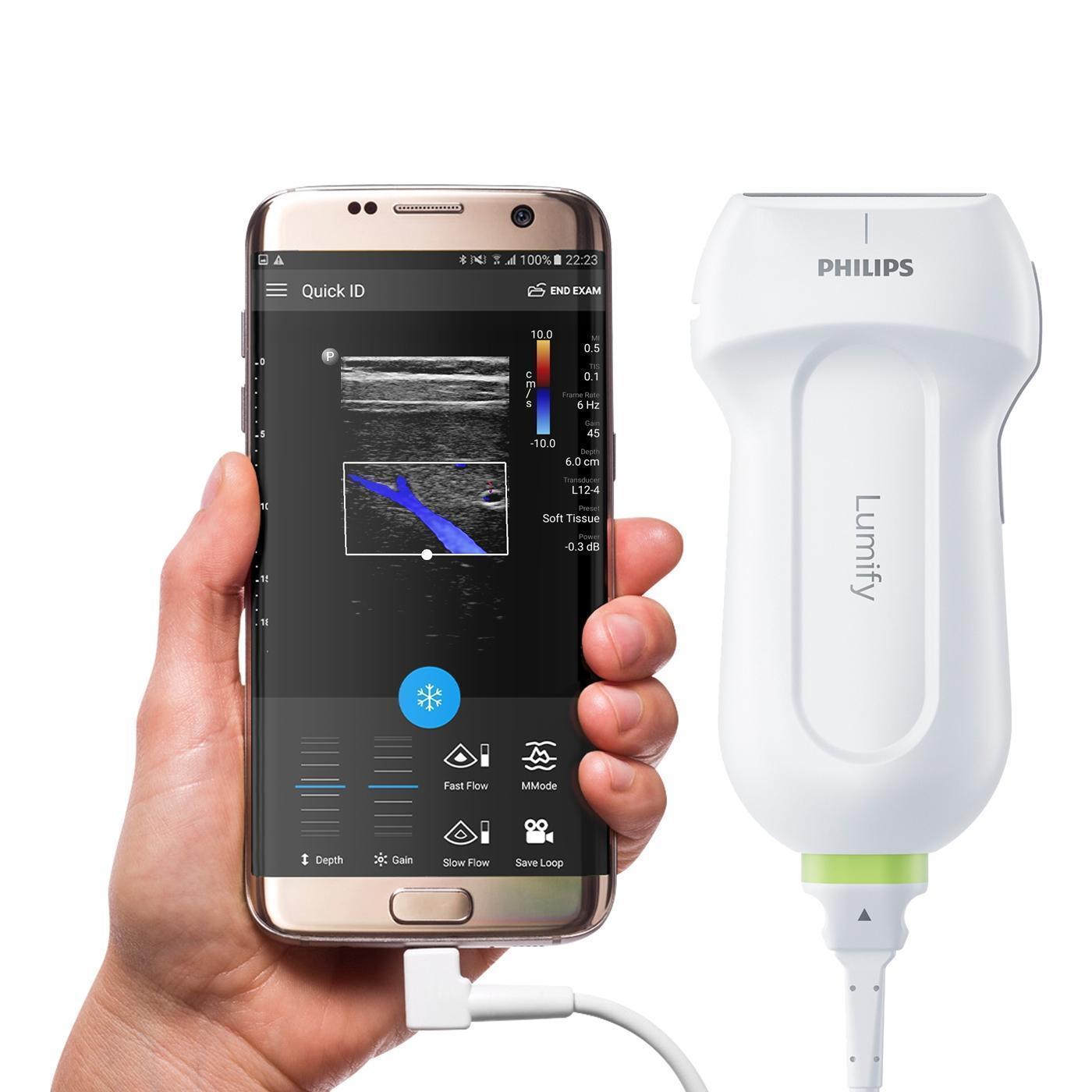
Philips HealthCare has a long-standing reputation in diagnostic imaging, and the Lumify L12-4 is their entry into the handheld linear probe market. It ranks fourth on this list primarily for its hospital workflow integration rather than its MSK-specific performance. The Reacts teleultrasound platform is a genuine differentiator — it enables real-time remote collaboration, making it the strongest option on this list for teaching hospitals and multi-site institutional deployments. Image quality is solid and it has been independently validated in multiple peer-reviewed settings. The wired USB connection is its most notable limitation for MSK clinical work: in a procedural environment where you are guiding a needle with one hand and holding the probe with the other, a cable connecting the probe to a tablet creates a real friction point. It is Android-only, which restricts deployment flexibility. For dedicated MSK or physiotherapy clinics that prioritise wireless freedom and procedural ergonomics, the Lumify ranks below the Clarius and GE Vscan. It earns its place for institutional settings where DICOM integration, PACS compatibility, and remote teaching capability are the primary decision criteria.
- Strong DICOM and PACS integration for institutional settings
- Reacts teleultrasound for real-time remote collaboration and teaching
- Well-validated image quality across peer-reviewed MSK studies
- Established Philips support and service network globally
- Wired connection limits procedural freedom
- Mandatory subscription adds ongoing cost
- No MSK-specific AI features or needle enhancement mode
- Android only — no iOS support
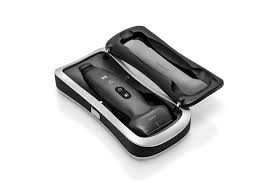
Mindray is one of the world's largest medical imaging manufacturers, and the TE Air e5M represents their handheld POCUS offering for mixed-practice settings. Its standout feature is the 2-in-1 probe design — a convex and linear transducer in a single wireless device — which covers MSK, vascular, and abdominal imaging without swapping probes. At 229 g it is among the lightest devices on this list. The iTouch+ image optimisation engine adjusts settings automatically for consistent results, and iScanHelper provides guided scanning assistance that helps less experienced users get clinically useful images faster. The 3-year warranty is the longest on this list and represents a meaningful total cost of ownership advantage. For a pure MSK practice the TE Air e5M is slightly overspecced — you are paying for dual-probe versatility you may not fully use. And with no subscription, no AI tools, and no dedicated needle guidance mode, it sits behind the top three devices on MSK-specific capability. Where it makes most sense is a mixed clinic that handles abdominal or general POCUS alongside MSK, and wants a capable wireless device with no recurring software costs.
- No subscription fees — ever
- 2-in-1 probe eliminates transducer swapping for mixed-practice clinics
- Longest warranty on this list at 3 years
- Lightweight at 229 g with wireless freedom
- iTouch+ auto-optimisation helps consistent image quality
- No MSK-specific AI tools or tendon measurement
- No dedicated needle visualization mode
- Max frequency 8 MHz limits near-field resolution
- Feature availability varies by region and distributor
- No cloud storage option
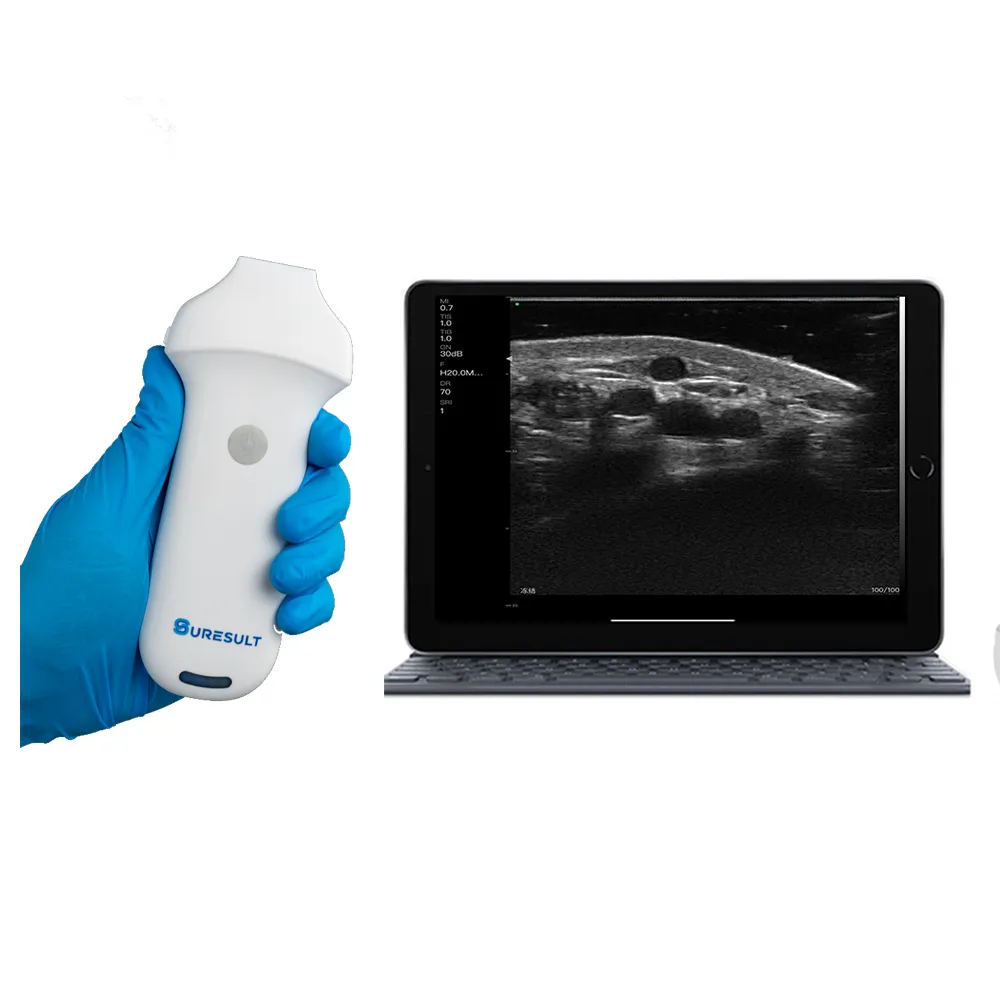
At approximately $2,800, the Suresult L10H undercuts the rest of this list substantially. Its 7.5/10 MHz linear probe covers basic tendon and ligament screening, and it includes color, power, and pulsed-wave Doppler at no extra cost. The no-subscription model and iOS/Android/Windows compatibility are genuine positives for budget-constrained settings. For a physiotherapy clinic doing entry-level MSK screening with a tight equipment budget, it is a viable starting point. However, clinicians doing injection guidance or complex diagnostic work should invest in a higher-validated device. Independent frame-rate testing by third-party reviewers has noted lower FPS performance relative to established devices, which may affect real-time procedural imaging quality.
- Lowest price point on this list
- No subscription, free app
- iOS, Android, and Windows compatible
- Color, PD, and PW Doppler included
- Limited independent clinical validation
- No AI tools or needle enhancement mode
- Lower frame rates reported in third-party testing
- Not recommended for complex injection guidance
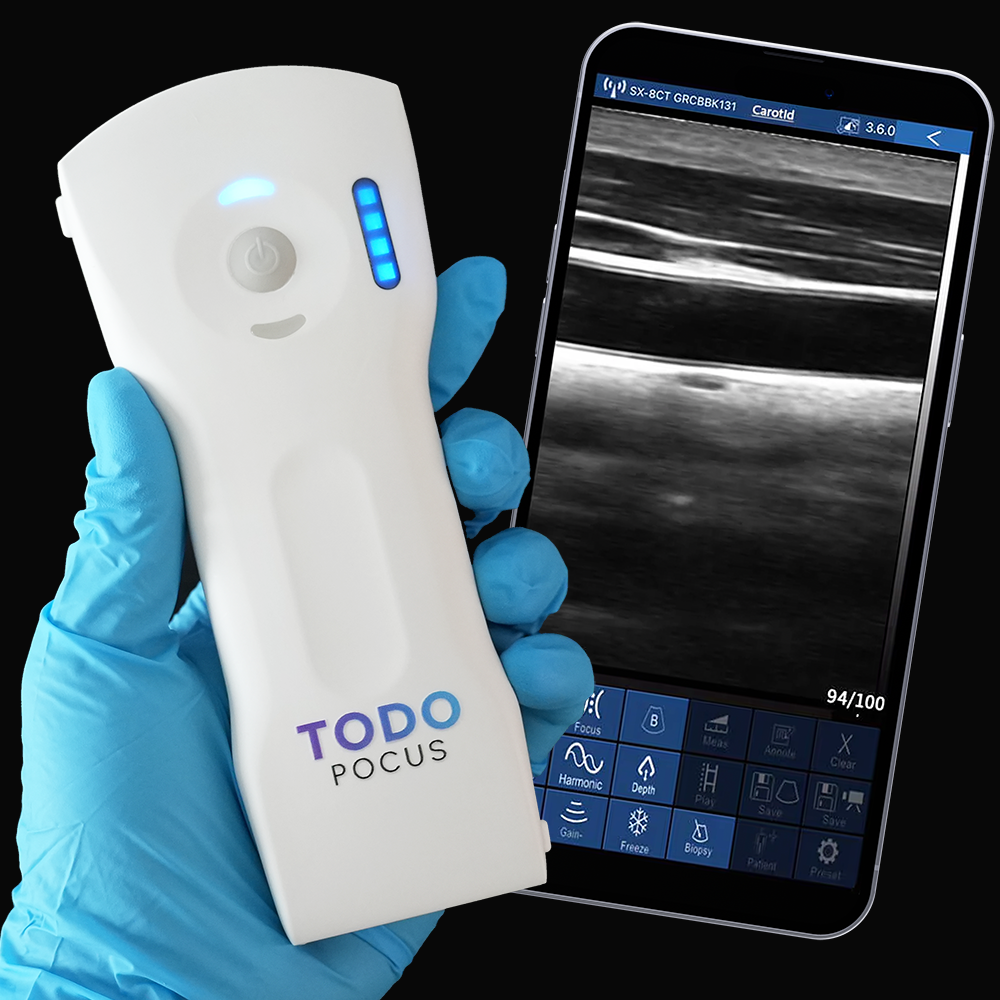
The TodoPocus L10H-Guide markets integrated magnetic needle visualization as its key differentiator for MSK injection guidance. At its price point, this could be a compelling value proposition if the functionality delivers reliably. However, independent peer-reviewed evidence supporting these performance claims is limited at time of writing. The needle guidance score of 7.3 reflects the claimed magnetic tracking feature — if that feature performs as advertised it represents good value for injection-focused clinicians on a tight budget. Clinicians for whom needle guidance is a primary use case would be better served by validated options higher on this list, particularly the Clarius L15 HD3 with its FDA-cleared Needle Enhance mode.
- Claimed magnetic needle visualization at a budget price point
- Wireless design with no subscription fees
- Competitive value if needle visualization claim is verified
- Limited independent peer-reviewed clinical validation
- Regulatory documentation difficult to independently verify
- No AI tools or MSK-specific features
- Request demo and full documentation before purchase
Which MSK Ultrasound Is Right for Your Clinic?
The right device depends on your primary scan type, your team's experience level, and your budget. Here is how we would match each clinical scenario to a device.